 Moldes para máquinas de bloques – Fábrica de moldes para máquinas de ladrillos

Lo que buscan los productores de bloques de hormigón experimentados antes de comprar un molde
Si ha buscado en línea un molde de adoquín entrelazado, Probablemente hayas notado que casi todos los proveedores afirman ofrecer alta calidad, larga vida útil, y precios competitivos. A primera vista, muchos moldes parecen casi idénticos.
En realidad, ellos no lo son.
Después de años fabricando moldes para líneas de producción de bloques de hormigón, Hemos descubierto que las mayores diferencias a menudo están ocultas dentro del proceso de fabricación en lugar de ser visibles en el producto terminado.. Grado de acero, precisión de mecanizado, tratamiento térmico, asamblea, y la inspección influyen en el rendimiento de un molde después de miles de ciclos de producción..
Esta guía explica a qué suelen prestar atención los compradores experimentados y qué muchos compradores primerizos suelen pasar por alto..
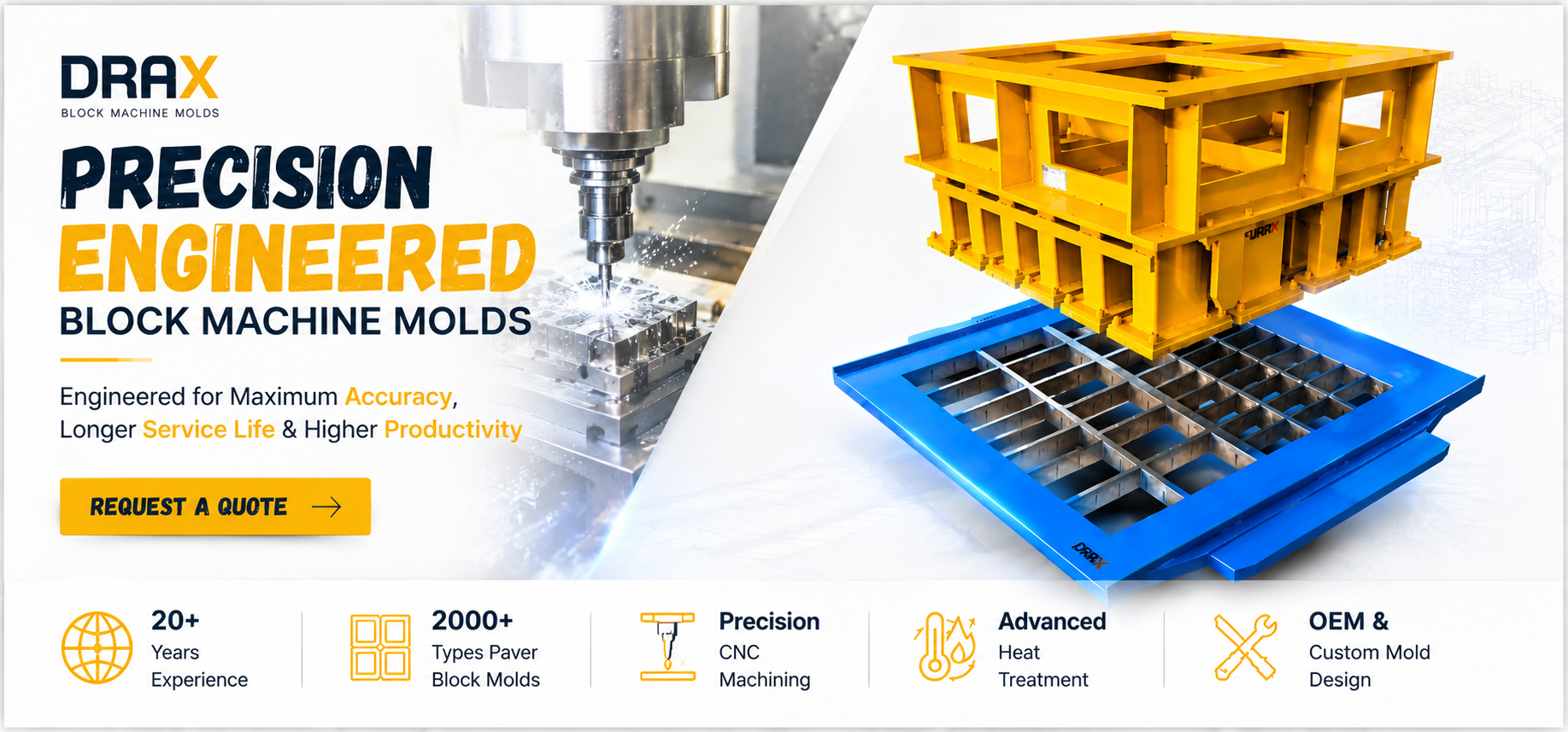
El precio es importante, Pero nunca debería ser la única decisión
Uno de los errores más comunes que vemos es que los compradores comparan cotizaciones basándose casi exclusivamente en el precio..
Un molde de menor precio puede parecer idéntico en las fotos., pero dos moldes con las mismas dimensiones externas pueden funcionar de manera muy diferente en la producción.
El rendimiento general de una molde de azulejos entrelazados Depende de mucho más que su apariencia.. Factores como:
- Selección de acero
- Diseño estructural
- Precisión de mecanizado CNC
- Proceso de tratamiento térmico
- Profundidad de la capa carburizada
- Precisión de montaje
- Inspección de calidad final
todos contribuyen a la vida del molde, calidad del bloque, y costos de mantenimiento.
Un molde que cuesta un poco más inicialmente puede producir muchos más bloques antes de desgastarse., Reducir el tiempo de inactividad y disminuir el costo total de producción durante su vida útil..
Pregúntele al fabricante sobre el desgaste, No sólo dureza
Muchos proveedores anuncian valores de dureza como HRC60 o HRC62..
La dureza es importante, pero es sólo una parte de la historia..
Una mejor pregunta es:
¿Dónde normalmente se desgasta primero el molde?, y por qué?
Los fabricantes con experiencia real en producción deberían poder responder a esta pregunta de inmediato..
¿Dónde suele desgastarse primero un molde de adoquín entrelazado??
Una de las zonas que sufre mayor desgaste es la cavidad inferior del molde (morir).
Durante la producción a largo plazo, El desgaste excesivo en el fondo de la cavidad puede crear gradualmente lo que muchas fábricas llaman “zapatos de elefante.” Una vez que esto suceda, las dimensiones del bloque se vuelven inconsistentes, los bordes pierden definición, y la calidad del producto comienza a disminuir.
De nuestra experiencia en fabricación, Este tipo de desgaste suele estar asociado con una o más de las siguientes condiciones.:
- La superficie inferior del molde no ha sido rectificada con precisión después del mecanizado., resultando en una planitud insuficiente.
- La vibración excesiva o la mala alineación de la máquina provocan un movimiento continuo entre el molde y la mesa de la máquina..
- Las finas partículas de hormigón escapan gradualmente debajo del molde durante la vibración., Acelerar la abrasión alrededor de los bordes de la cavidad..
Aunque estos problemas pueden no ser visibles cuando el molde es nuevo, pueden afectar significativamente la vida útil después de decenas de miles de ciclos de producción.
Esta es la razón por la que los fabricantes experimentados prestan mucha atención a la planitud de la superficie inferior., rectificado de precisión, y precisión dimensional general antes de la entrega.
La precisión es más importante de lo que la mayoría de los compradores esperan
Muchos compradores se centran en el material de acero pero prestan menos atención a la tolerancia del mecanizado..
para un molde de adoquín entrelazado, La precisión dimensional afecta directamente:
- Dimensiones del bloque
- Acabado superficial
- Calidad de esquina
- Rendimiento de desmoldeo
- Estabilidad de la vibración de la máquina
Pequeñas desviaciones en el mecanizado pueden parecer insignificantes individualmente, pero se acumulan durante la producción y eventualmente afectan la consistencia de cada bloque que sale de la máquina..
Profesional fabricantes de moldes para adoquines invertir mucho en mecanizado CNC, corte de alambre, rectificado de precisión, y equipos de inspección porque estos procesos determinan si cada cavidad funciona de manera consistente..
El tratamiento térmico es más que un número de dureza
Es fácil anunciar un valor de dureza..
Es mucho más difícil producir una dureza constante en todo el molde..
Un proceso de tratamiento térmico confiable debe incluir una cementación controlada., temperatura estable del horno, y procedimientos de enfriamiento adecuados.
En DRAX, Los componentes críticos de desgaste están fabricados con acero de aleación especial con bajo contenido de carbono y se someten a un tratamiento térmico de cementación profunda., logrando:
- Dureza hasta HRC 62–65
- Profundidad de la capa carburizada excediendo 1.5 milímetros
- Resistencia al desgaste mejorada para una producción a largo plazo.
El objetivo no es simplemente alcanzar un alto número de dureza, pero manteniendo la estabilidad dimensional mientras se extiende la vida útil del molde..
Mire más allá del grado de acero
Algunos compradores preguntan si un molde utiliza HARDOX®, acero aleado, u otros materiales.
La selección de materiales ciertamente importa, pero elegir el material adecuado para el componente correcto es aún más importante.
Por ejemplo, Los componentes expuestos a abrasión continua durante la producción pueden beneficiarse de materiales resistentes al desgaste como el acero HARDOX®., mientras que otras partes estructurales requieren un equilibrio entre resistencia, maquinabilidad, y soldabilidad.
Un buen diseño de molde consiste en seleccionar el material más adecuado para cada función, no simplemente utilizar el acero más duro en todas partes..
Preguntas que vale la pena hacer antes de realizar un pedido
Antes de seleccionar un fabricante de moldes para adoquines entrelazados, considere preguntar:
- ¿Qué acero se utiliza para la cavidad y la zapata??
- ¿Cómo se trata térmicamente el molde??
- ¿La superficie inferior está rectificada con precisión después del mecanizado??
- ¿Qué tolerancia de mecanizado puedes lograr??
- ¿Cómo se inspecciona cada molde antes del envío??
- ¿Pueden proporcionarme moldes compatibles con mi modelo de máquina de bloques??
La calidad de las respuestas a menudo dice más que la cita misma..
Por qué la experiencia sigue siendo importante
Las máquinas CNC modernas están disponibles para muchos fabricantes..
Lo que no se puede adquirir de la noche a la mañana es experiencia en fabricación..
Saber dónde se desgastan los moldes, Comprender por qué los bloques se agrietan o se pegan durante el desmoldeo., y diseñar estructuras que permanezcan estables después de miles de ciclos de producción provienen de años de producción práctica, no solo del software..
Esa experiencia acumulada suele marcar la diferencia entre un molde que dura y uno que requiere reparaciones frecuentes..
Pensamientos finales
Elegir un molde de adoquín entrelazado no es simplemente elegir una pieza de acero.
Es elegir un proceso de fabricación..
El derecho fabricante de moldes para adoquines debería poder explicar no sólo qué materiales se utilizan, pero también por qué métodos de mecanizado específicos, procedimientos de tratamiento térmico, estándares de inspección, y se adoptan diseños estructurales.
Es posible que estos detalles nunca aparezcan en una cotización., sin embargo, a menudo determinan el verdadero costo de propiedad durante la vida útil del molde..
Si está planeando una nueva línea de producción o busca mejorar el rendimiento de su existente molde de azulejos entrelazados, Tomarse el tiempo para evaluar estos factores antes de realizar el pedido puede ahorrar importantes costos de mantenimiento y tiempo de inactividad de producción en el futuro..